Paint Protection Film Guide for Austin Drivers: Coverage, Benefits and Limits
Paint Protection Film • Quick Answer
AUSTIN, TX
Protect the paint. Know the limits.
Paint protection film (
PPF means paint protection film.
It protects the surfaces it covers but does not
make paint damage-proof.
) is a protective layer applied over a vehicle’s painted
surfaces to help reduce damage from road debris and light abrasion.
It protects the areas it covers; it cannot make a vehicle
damage-proof or repair missing paint. The right coverage depends
on the panels you want to protect, the way you use the vehicle
and your budget.
For Austin drivers comparing options, the useful starting point
is a clear picture of what film can do. Once that is settled,
choosing coverage and a finish becomes a more focused conversation.
What paint protection film actually does
Most clear PPF is a polyurethane film bonded to the surface with an adhesive. A manufacturer’s product may also have a protective topcoat. XPEL’s technical data describes this construction for its ULTIMATE PLUS film, including a surface layer designed to recover from light scratches.
You may hear PPF called a clear bra. Both names refer to the same type of protective film. Coverage can be limited to selected areas or extended across more of the painted body.
The film sits above the paint. That makes it a sacrificial surface: some wear reaches the film before it reaches the finish underneath. A damaged piece of film may still need attention or replacement, and a strong enough impact can damage both layers. Ask about the specific product being quoted rather than assuming every film performs identically.
Understanding Paint Protection Film
Benefits, with the limits kept in view
Protection claims are easier to evaluate
when the benefit and its boundary are
explained together.
BENEFIT 01
Road debris and light abrasion
PPF is designed to help protect against
stone chips and abrasion. Common areas
to discuss include the bumper, hood,
mirror housings and lower painted panels.
These are examples of coverage priorities,
not a prediction that every vehicle will
experience the same wear.
Important Limitation
Film is not armor against every object
or impact. A large strike, a collision
or damage outside the covered area can
still affect the vehicle. Choose coverage
with that limit in mind rather than
expecting a guaranteed damage-free finish.
BENEFIT 02
Self-healing surface marks
Some PPF products can recover from minor
scratches in the film’s surface.
XPEL explains
that deeper scratches which penetrate
the film may not fully heal and can
require professional attention or
replacement.
Important Limitation
That distinction matters when you inspect
a mark: a light surface swirl, a cut
through the film and a chip in the paint
are different problems. Self-healing
does not mean the underlying paint regrows
or a dent disappears. Have unfamiliar
damage assessed before trying a repair.
BENEFIT 03
Contaminants and existing paint damage
Film can provide a barrier against some
everyday contamination, but it still
needs cleaning. Bird residue, insects
and water deposits should not be treated
as harmless simply because a panel
is covered.
Important Limitation
Existing chips, failing paint and deeper
defects also need a separate discussion.
Film goes over the surface; it does not
replace missing material. Decide what
finish you are willing to preserve before
committing to an installation.
Think in terms of priorities before choosing a package name. Are you mainly concerned about the front of the car, exposed lower panels or a more consistent protective layer across the painted body?
TX Tint & PPF lists full-front, track and full-wrap options. You can compare PPF coverage options on the service page, then confirm the exact included panels for your vehicle. Ask about areas such as mirror housings, headlights, painted trim, and panel edges instead of assuming the package name settles every detail.
A focused installation and broader coverage answer different needs. Write down the areas you care about most and any areas you are comfortable leaving uncovered. That gives you a useful basis for comparing quotes without turning the largest package into an automatic requirement.
Gloss and satin are finish choices
Coverage describes where the film goes. Finish describes how the covered surface looks. Keep those decisions separate when discussing your options.
Clear gloss film aims to retain a glossy appearance, while a satin product changes the visual effect. XPEL describes STEALTH as a satin-finish PPF and TX Tint lists Stealth among its options.
Look at a physical sample and ask how the finish will appear next to uncovered areas. Film edges can be noticeable, particularly with partial coverage, so an absolute promise of invisibility is not a useful standard. You can also view the work gallery for visual context before discussing your own vehicle.
What to expect before and after installation
A useful installation conversation starts with the current surface. Tell the installer about repainting, repairs, existing film, chips and other concerns. Ask whether any preparation is recommended and what it is intended to achieve. A new vehicle still deserves an inspection rather than an assumption that its finish is ready.
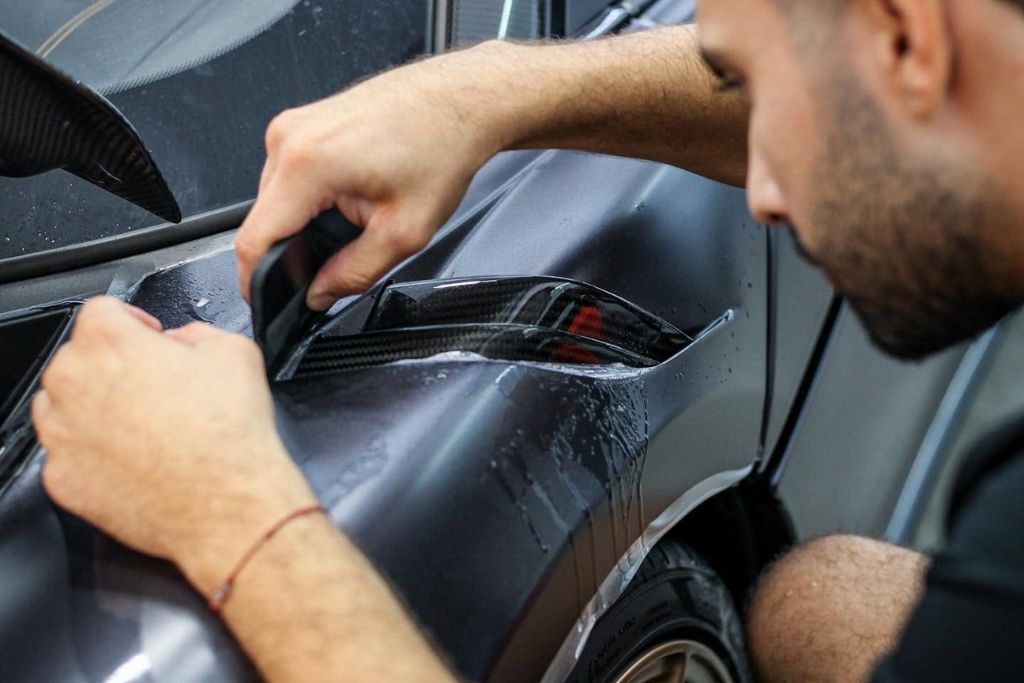
At a broad level, installation involves preparing the surface, applying the film and inspecting the finished work. The precise method and scope depend on the vehicle and product. Ask which details will be confirmed before work begins, especially if your quote includes additional preparation.
At collection, review the coverage together and obtain written aftercare instructions. Ask what you should expect as the installation settles, which changes should prompt a call and whom to contact with questions. An agreed handoff is more useful than a universal promise about completion time or appearance.
Care and warranty questions to settle at handoff
Use the care instructions for the film actually installed. XPEL publishes different initial washing waits for different product lines, so a single internet rule should not replace your product-specific instructions.
Its guidance also stresses prompt contaminant removal and caution with high-pressure water near film edges. Ask which cleaners, wash methods and maintenance products are suitable for your finish. Avoid experimenting with aggressive chemicals or attempting to lift an edge to clean underneath it.
Review warranty terms separately from protection claims. A limited product warranty may address specified film defects while excluding damage caused by outside forces or improper care. A product being designed to reduce rock-chip damage does not automatically mean rock impacts are covered by its warranty.
Keep the product name, coverage record, invoice and applicable written terms. Ask how a concern is assessed and whether any separate workmanship terms apply to your purchase.
Your PPF Quote Checklist
Bring these details to a PPF quote
A short set of details can make the discussion more productive:
Items prepared / 6
Ready to discuss coverage for your vehicle? TX Tint & PPF serves drivers from its Austin shop at 2500 S Hwy 183, Building 3 Unit 330. Share your vehicle details and request a free quote, or call 512-552-7717.
Frequently Asked Questions
A few questions before choosing film
Can PPF go on a used vehicle?
A used vehicle is worth assessing rather
than ruling out by age alone. The important
discussion is the condition of the surfaces
being covered and any previous repairs.
Ask the installer to identify defects that
will remain and any work recommended before
film is applied. Do not assume installation
will restore a damaged finish.
Is PPF the same as ceramic coating?
No. PPF is a film layer intended to help
resist physical wear such as chips and
abrasion.
Ceramic coating is a surface treatment
commonly chosen for water-repelling
behavior and easier maintenance.
The choice, or a compatible combination,
should follow your priorities and the
exact products involved. They should not
be presented as interchangeable protection.
Can the film be removed later?
PPF can be removed, and XPEL recommends
professional removal. Discuss the age
and condition of the film and the
underlying paint before arranging the
work. That is particularly relevant
when repair or repaint history is
uncertain. Removability should not
be treated as a universal guarantee
that every existing paint surface
will be unaffected.
Does every vehicle need full-body PPF?
No single coverage plan is necessary for
every owner. Start with the areas you want
to preserve, your expectations and the
budget available. Broader coverage protects
more selected surfaces, while a focused
plan leaves other areas exposed. The
decision should be deliberate rather than
based only on the biggest package name.